Thrills and Chills: A Glance at Bills Filed during the 2021 Session

the indiana state house

If you’re like me, you’re already sick of political chatter this year. Extremism from both sides of the political aisle is the greatest I recall during my lifetime, and politics seems to be becoming less collegial. Yet, rather than work toward compromise, partisans are turning inward to isolate themselves or “canceling” those of whom they are critical. I have always enjoyed browsing the marketplace of ideas and considering all potential policy solutions to resolve an issue. And Lord knows, I have a lot of issues!

I am not alone; the disability community, too, could be specifically affected by a number of bills introduced in this year’s session of the General Assembly. This blog post is a curated list of some of the bills that I hope will be passed, as well as the bills I view as particularly detrimental to the interests of the greater disability community. I’ve also thrown in some bills that seem just plain weird. In the interest of time, have limited myself to three topics per category. Thus, the good, the bad, and the ugly of the 2021 Session:

The Good

HB 1081 – Medicaid Self-Directed Care. Yes! This bill would require the Family and Social Services Administration (FSSA) to submit a State Plan Amendment to the federal government, requesting that the Indiana’s Medicaid program participate in the Community First Choice Option to give more Medicaid enrollees access to self-directed care. Currently, Indiana only allows some participants on its Aged and Disabled Waiver limited options to receive some attendant care services in a self-directed manner. This bill, if enacted, would presumably provide many more Hoosiers much more autonomy over their activities of daily living.

HB 1092 – Tax Credit for Contribution to ABLE Accounts. I cannot think of a single reason anyone would oppose this bill (except, perhaps, for Ebenezer Scrooge, himself). If passed, this bill would provide a state tax credit to any taxpayer contributing to an ABLE account in the state. The tax credit would be the lesser of: (1) the total amount of contributions made by the taxpayer in the taxable year; (2) $1,000 (or, for a married person filing a separate return, $500); or (3) the amount of the taxpayer’s adjusted gross income minus allowable credits. This bill is particularly beneficial to working individuals with ABLE accounts, as they can benefit from funds added to their accounts and the tax credit.

Multiple bills would keep and/or expand telemedicine/telehealth in Indiana, including, HB 1286, HB 1347, and SB 3. During the pandemic, many Hoosiers learned what people with disabilities already knew: sometimes it’s difficult or impossible to go out about for health care purposes. Although having complete choice as to whether one meets in person or remotely would be ideal, at least those with transportation difficulties now have at least one avenue to receive needed medical care.

The Bad

SB 12 – Service Dog Endorsement on Operator’s License. This bill worries me more than any other, especially as a service dog owner. If passed, the Bureau of Motor Vehicles (BMV) would have to ask those obtaining or renewing driver’s licenses whether they voluntarily want their license to describe the use of their service animal. Critically, the bill defines “service animal” differently than federal law does. Moreover, the BMV has no mechanism to truly know whether a service animal is legitimate. For these reasons, the public will be more confused than ever about service dog laws. In addition to navigating that confusion, service dog handlers will also likely encounter more fake service dogs than ever. Please let Senator Kruse know that people with legitimate service dogs denied entry to public facilities already have resolution methods. SB 12 would only make the problem worse.

Several bills, including HB 1295 and HB 1375, for the Elimination of Gun-Free Zones. Don’t get me wrong; I generally be support Second Amendment and believe the world would be a lot safer if everyone was packing. However, there are a few places where guns do not logically belong, including State-operated facilities for individuals with mental illness. I am not associating mental illness with criminal violence. However, I am concerned that if individuals working in these facilities bring weapons onto the campus, the risk of suicide and other forms of bodily harm is needlessly increased. As a State employee who is physically unable to wield a gun, I am also uncomfortable with the idea that frustrated members of the public could legally carry guns when coming to confront me or my colleagues.

Another batch of bills, including HB 1315, HB 1437, and SB 369, would allow government bodies to meet and conduct business remotely. As noted when discussing the telehealth bills, remote participation is usually a nice option for people with disabilities. However, government bodies do not seem as attuned to the needs of people with disabilities as do medical providers (and, as those using American Sign Language can certainly attest, medical providers still fall short granting reasonable accommodation requests). Just trying to watch the 1102 Commission meetings during the coronavirus pandemic was an ordeal, even though the subject matter was intellectual and developmental disability services. Thus, I am concerned that if more government business is conducted electronically, people with disabilities will be shut out of the conversation more easily. Not all platforms are accessible to individuals with various disabilities, not everyone has access to the Internet, etc.

The Ugly

HB 1333 – Cultural Awareness and Competency Training. I appreciate the intention behind this bill, which is to ensure that healthcare professionals have ongoing cultural awareness and competency training – including disability-related training. The problem is that the Department of Health and the Office of Minority Health must develop the training. I don’t know about you, but I would much prefer the Governor’s Council on People with Disabilities or Indiana Disability Rights to provide disability awareness and competency training.

SB 286 – Disability and Rehabilitative Services. This bill provides criteria as to what individuals comprise the Division of Disability and Rehabilitative Services (DDRS) Advisory Committee. Two things about this bill bother me. First, only two self-advocates are permitted to serve on the Committee, although its work pertains exclusively to people with disabilities. Second, and the reason why I categorize this bill as “ugly,” is because it is disability-specific, limiting membership to those involved with or having intellectual and developmental disabilities. As we know, DDRS serves people who are blind, people who are Deaf or deaf, people with physical disabilities, and people with mental illness, in addition to people with intellectual and developmental disabilities.

A handful of bills would, if passed, raise the minimum wage, including HB 1345 and SB 334. Importantly, neither of these bills would change the definition of “employee” in the Indiana Code. This means that, even if one of these bills went on to increase Indiana’s minimum wage, it would still be lawful to pay people with disabilities working in sheltered workshops as little as one cent per hour. I encourage you to reach out to these bills’ sponsors and see if either would be willing to see wages increase for all Hoosiers.

I promised to be brief, which has precluded me from discussing other important bills. I also encourage you to check out: SB 74, which would make it illegal for an employer to require an employee to vaccinate; SB 378, regarding electronic monitoring in nursing homes; HB 1261, which would require places of public accommodation to use closed captioning on all televisions in use; nearly every voting bill; and SB 202, SB 206, and SB 229, which would generally preclude nursing homes from excluding visits from all family members during a public emergency. Although this might ban me from social media, I have to say it: Keep fighting for disability rights!
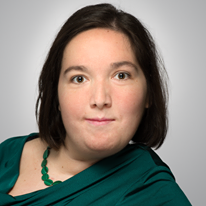
(Picture of Emily Munson wearing green V-neck shirt and green beaded necklace. She is smiling and has shoulder length black hair) Emily Munson, 36, is an Indianapolis attorney with spinal muscular atrophy, type 2. She enjoys advocating for disability rights, reading, and cuddling with her service dog, Rigby.

Vulnerability in Sexual Violence Primary Prevention

Originally published by ICADV on October 22, 2020

At some point in the last five years the phrase “vulnerable populations,” used heavily in grant announcements and research articles, has leaked into my writing and my speech, especially in professional settings. For years I introduced myself as a Preventionist who works with vulnerable people or populations to engage in sexual violence primary prevention (SVPP). Last fall I attended a presentation that left me feeling challenged by how I understood vulnerability and the way I have used it to construct a frame for the work to end sexual violence (SV) against people with disabilities.

The fact is all humans are vulnerable and all humans are exposed to varying degrees of risk for different kinds of harm throughout their lives. Vulnerable is an adjective that means easily hurt, wounded, or attacked (from the Latin verb “to wound”). In a culture that glorifies, normalizes, and capitalizes on violence it makes sense to have such language to describe people. When vulnerability becomes shorthand for the problem of historic and continuous inequity within and across systems, bias can thrive, and the connection to the problem—systems inequity for people with cognitive disabilities—is lost. Vulnerability then becomes a tool of silence integrating to the cultural scaffolding of sexual violence as an option with few consequences for people who harm.

People with cognitive and developmental disabilities experience disproportionate rates of sexual violence, but they are not inherently more vulnerable to violence victimization or perpetration than people without disabilitiesInstead of seeing an individual as “vulnerable” we should look towards the disproportions or inequalities in our society that make some people more vulnerable to sexual violence and address the willingness of people who cause harm to exploit those inequities to abuse people with disabilities.


People with cognitive or developmental disabilities have less access to opportunities and resources across the lifespan and it is these differences that are disabling to individuals and their families. It is not the person’s identity that makes them vulnerable. The scale of exclusion from protective systems of support—like having one’s basic needs met and connectedness through a variety of human experiences across the lifespan—makes a person vulnerable to increased risk of experiencing violence or causing harm. This makes critical the need for sexual violence prevention strategies that create protective environments

When our prevention strategies address community or neighborhood specific risk factors, like poverty, no internet access, or inaccessible and unavailable public transportation, we create opportunities for safety, stability, and nurturance among people. This connectedness-architecture is population level infrastructure that reduces toxic stress—a precursor to violence perpetration—broadly benefitting everyone in the community. It is from within this web of social connectedness experiences that humans can and do take risks in relationships and build resilience. Resilience is a survivor’s callous, it does not prevent sexual violence or vulnerability, but social connectedness does.

Our organizations can lead with policies and practices that support human connectedness among staff, such as paid family leave, and tele-commuting post-pandemic. In day-to-day operations, addressing inequity within our prevention practices could include budgeting time, space, and dollars to create accessibility in events, on websites, and in programs; organizations can also create accessible in-person and online meeting environments. Prioritizing accessibility creates an invitation for people with disabilities to be part of and learn about the work of prevention. However, accessibility is a legal baseline and not the same as inclusion.

Building connectedness across difference requires time, trust, genuine understanding, and intentional relationship building with people with disabilities. It is harder for me as a professional primary preventionist of violence to replicate structurally supported inequitable conditions in my work if I am accountable to people with disabilities. My professional inclusion practice is in the elevating of the voices of people with disabilities in the work to end sexual violence. Because the Rape Prevention and Education grant allows consultants to be paid an equitable rate, people with disabilities are paid for their feedback and contibutions to end sexual violence. I have colleagues with disabilities who are willing to help me learn when I am using able bias and ableism in my prevention strategies and leadership practices. Recognizing and acting against bias and discriminately wielding equity is critical to ending sexual violence in Indiana.

The problem of sexual violence is not with individuals, but with how individuals and systems use power-over to maintain the status quo. I am a gatekeeper of sexual violence prevention work in Indiana and I can cause harm through my professional practices. I am a Prevention Specialist who works with leaders and decision makers in our state to address the lack of access to opportunities and resources for people with disabilities who are continually segregated, isolated, and marginalized from essential systems like transportation, employment, and education, and from critical violence prevention strategies and crisis intervention services. By addressing equity in internal organizational practices and in external partnerships, preventionists can work to change the systems that marginalize and devalue people and construct vulnerability. We can’t shorthand anti-oppression work—there is nothing short or easy about it.

Neuroqueer Survivorship/Supervivencia Neuroqueer – Faerie Bear Art


About Faerie Bear Art

Faerie Bear Art is an art adventure by Skye Ashton Kantola (she/they) founded in late 2016. Skye is a fat, white, trans, queer, and intersex, chronically ill autistic person. Skye’s art focuses on trauma healing and uplifting marginalized communities. 10% of all art sales are donated to BreakOUT! Youth, a QTPOC youth lead organization focused on abolition and decriminalization in Louisiana. In some cases, the profits from certain pieces are also split with collaborators.

Ink Zentangle Highland Calf – Faerie Bear Art

An ink illustration of a highland calf who is galloping towards the right. This artwork contains an embedded words, "Productivity does not define your worth.  Your worth is unconditional."
An ink illustration of a highland calf who is galloping towards the right. This artwork contains an embedded words, “Productivity does not define your worth. Your worth is unconditional.”

About the Art

I created this shortly after my chronic lyme diagnosis and after beginning the first several months of treatment.  As my ability to work and be “productive” in ways that are rewarded by capitalism have decreased, I’ve been struggling to disentangle self-worth from ideas of productivity.  This is valuable and important and hard. I’m learning to listen to my body more and trust my own emotions.  I used to ignore pain, fatigue, and my emotional state to force myself through work.  Now if I cry, I know it’s because I’m too tired and I’m reaching meltdown status.  I need to stop and rest. Let’s create a world together in which people are valued for their humanity, not their productivity.


About Faerie Bear Art

Faerie Bear Art is an art adventure by Skye Ashton Kantola (she/they) founded in late 2016. Skye is a fat, white, trans, queer, and intersex, chronically ill autistic person. Skye’s art focuses on trauma healing and uplifting marginalized communities. 10% of all art sales are donated to BreakOUT! Youth, a QTPOC youth lead organization focused on abolition and decriminalization in Louisiana. In some cases, the profits from certain pieces are also split with collaborators.